Search indexing
Crawl and index entire sites to power search, RAG pipelines, and internal knowledge bases.
The web wasn't built for agents. Browserbase gives your web crawler real cloud browsers that render JavaScript, follow links across a site, and reach pages that turn away ordinary tooling. Describe what you need and the Stagehand SDK returns it as structured data, with no per-site tuning.

The Problem
The Solution
Crawl and index entire sites to power search, RAG pipelines, and internal knowledge bases.
Crawl competitor catalogs, pricing, and content across hundreds of sites on a schedule.
Follow links to collect articles, listings, and user-generated content from dynamic sources.
Crawl your own properties to check links, metadata, and accessibility at scale.
A web crawler is software that systematically browses websites, following links from page to page to collect content. Browserbase runs crawlers on real cloud browsers, so they render JavaScript and reach pages that static crawlers miss.
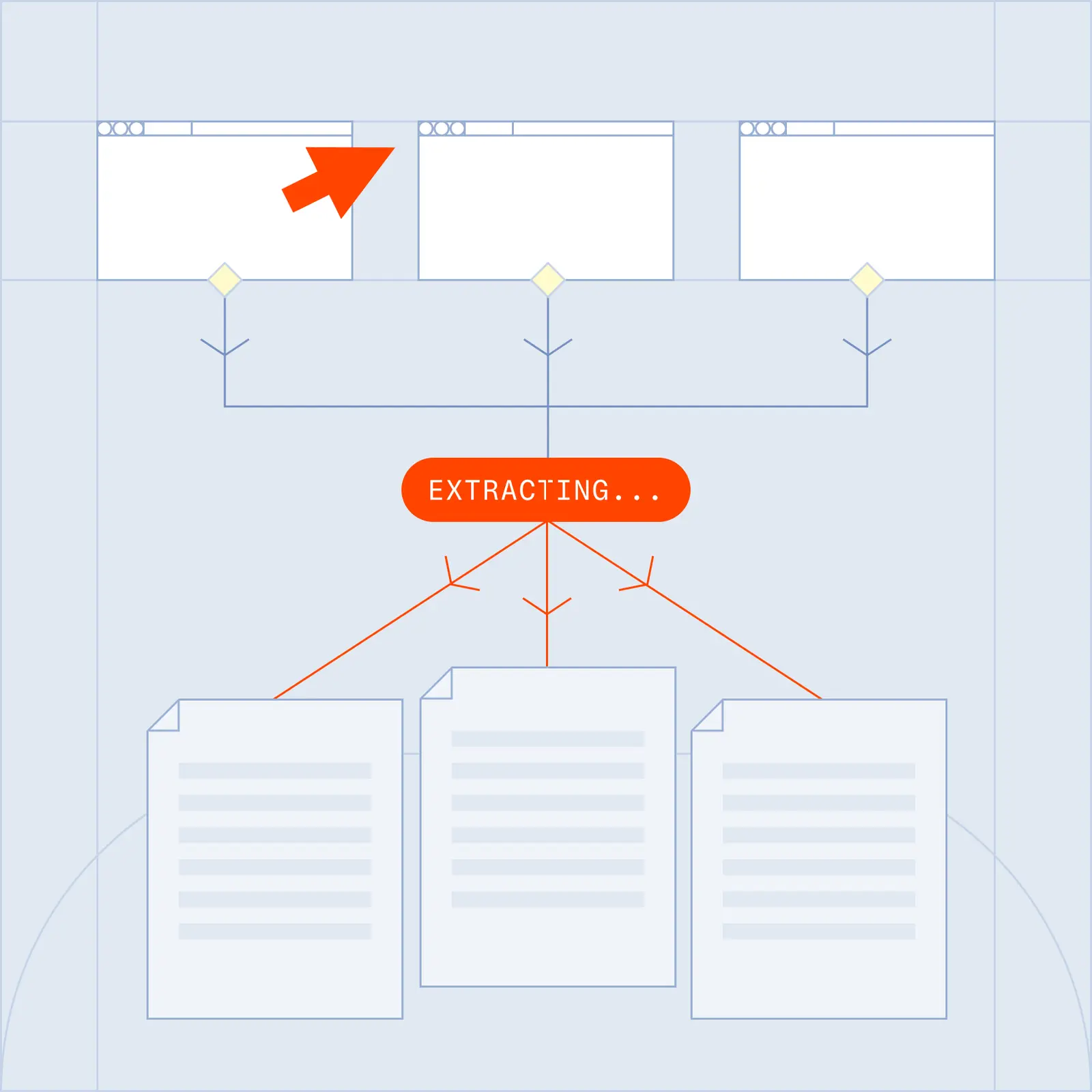
It starts from one or more URLs, loads each page, extracts the data and the links, then queues those links to visit next. On Browserbase, each page loads in a full Chrome session, so dynamic content renders exactly as a person would see it.
No. Use Fetch for lightweight HTTP retrieval on static pages, and fall back to a full browser session for JavaScript-heavy ones. The smart-fetch-scraper template does exactly this, so large crawls stay fast and cost-efficient.
With the Stagehand SDK in TypeScript or Python you describe the data you want and define a schema, and the crawler returns typed JSON. Browserbase handles the browsers, rendering, and access, so you focus on the crawl logic, not the infrastructure.
Crawling publicly available data is generally permitted, but you are responsible for respecting each site's terms and applicable laws. Browserbase gives your agent verified access through Agent Identity and Web Bot Auth, so sites can identify your crawler instead of guessing.
Any site a person can visit, including JavaScript-heavy single-page apps and pages behind login walls using persistent contexts. Verified access and residential proxies come with every session.
Yes. You can run thousands of browser sessions in parallel in the cloud and write results straight to clean, typed JSON, CSV, or your database.